
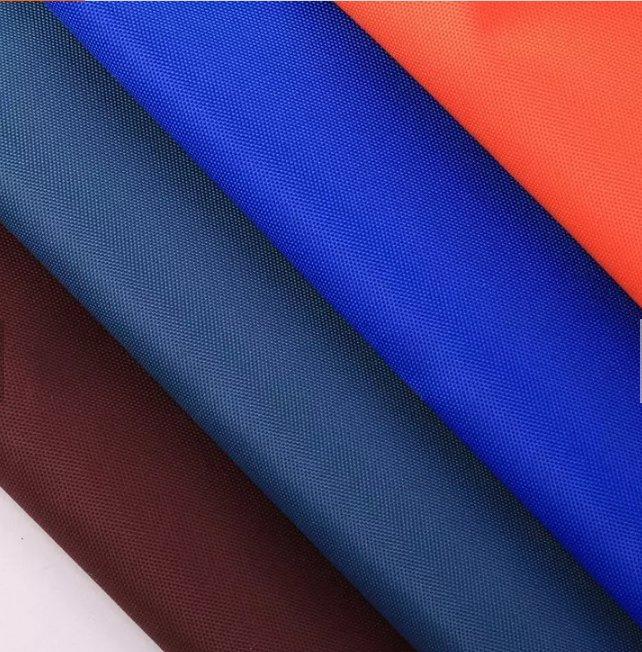
Choosing the right fabric is one of the most important decisions when developing outdoor products, bags, luggage, protective covers, and other textile products.
Oxford fabric is available in many different specifications, including 210D, 300D, 420D, 600D, 900D, and 1680D. Different coatings and finishing treatments can also significantly change the fabric’s performance.
So, how do you choose the right Oxford fabric for your product?
This guide explains the key factors you should consider before making a decision.
1. Consider Your Product Application
The first step is to determine how the fabric will be used.
A lightweight backpack does not require the same fabric as a heavy-duty outdoor cover.
For example:
- Backpacks: 300D, 420D, or 600D
- Travel bags: 420D or 600D
- Outdoor furniture covers: 600D or 900D
- BBQ grill covers: 600D or 900D
- Camping equipment: 300D, 420D, or 600D
- Heavy-duty equipment covers: 900D or 1680D
- Industrial bags: 900D or 1680D
Understanding the end use helps avoid choosing a fabric that is either too light or unnecessarily heavy.
2. Choose the Right Denier
Denier, commonly shown as “D”, refers to the thickness of the yarn.
Generally, a higher denier means thicker yarn and a heavier, more durable fabric.
300D Oxford Fabric
300D is a good option when lightweight and flexibility are important.
It is commonly used for:
- Lightweight backpacks
- Travel accessories
- Storage bags
- Pet products
- Outdoor accessories
420D Oxford Fabric
420D provides a balance between weight and durability.
It is suitable for:
- Sports bags
- Luggage
- Camping products
- General outdoor equipment
600D Oxford Fabric
600D is one of the most widely used specifications for outdoor products.
It offers a good combination of:
- Durability
- Abrasion resistance
- Tear resistance
- Cost efficiency
Typical applications include outdoor covers, backpacks, tool bags, and BBQ covers.
900D and 1680D Oxford Fabric
These heavier fabrics are designed for demanding applications where durability and abrasion resistance are priorities.
They are commonly used for:
- Heavy-duty bags
- Industrial covers
- Tool storage
- Protective cases
- Premium luggage
3. Consider Waterproof Requirements
Not every Oxford fabric needs the same level of water resistance.
If your product is designed for indoor use, a basic water-repellent finish may be sufficient.
Outdoor products exposed to rain require a higher level of water resistance.
Common options include:
- Water-repellent treatment
- PU coating
- PVC coating
- TPU lamination
The required waterproof performance should be determined according to the product’s environment and expected exposure to water.
For example, an outdoor furniture cover may require significantly better waterproof performance than a storage bag used indoors.
4. Don’t Forget UV Resistance
Products used outdoors are exposed to sunlight for extended periods.
UV radiation can cause:
- Color fading
- Fabric aging
- Loss of appearance
- Long-term material degradation
For outdoor applications, consider fabrics with appropriate light fastness and UV-resistant treatments.
This is particularly important for:
- Patio furniture covers
- BBQ covers
- Bicycle covers
- Tents
- Outdoor equipment covers
A fabric with good UV resistance can help maintain product appearance and extend its useful life.
5. Think About Abrasion Resistance
Abrasion resistance is particularly important for products that experience frequent friction.
For example, backpacks and tool bags may repeatedly rub against floors, vehicles, equipment, or other surfaces.
In these applications, 600D, 900D, or 1680D Oxford fabric may be more suitable than lightweight 210D or 300D fabric.
However, choosing the heaviest fabric is not always necessary.
The goal is to find the right balance between durability and weight.
6. Choose the Right Coating
The coating can have a major impact on fabric performance.
PU Coating
PU-coated Oxford fabric is lightweight, flexible, and widely used for bags and outdoor products.
PVC Coating
PVC-coated Oxford fabric provides strong waterproof performance and excellent durability.
It is particularly suitable for heavy-duty outdoor covers and protective products.
TPU Lamination
TPU can provide excellent waterproof performance while maintaining flexibility.
It is often selected for higher-performance applications.
7. Consider Sustainability
Sustainability has become increasingly important in the global textile market.
Depending on your target market and brand requirements, you may consider:
- Recycled polyester
- GRS-certified materials
- Fluorine-free water-repellent finishes
- PFAS-free solutions
- Environmentally friendly coatings
For brands targeting European and North American markets, sustainable material options can also help meet evolving customer and regulatory requirements.
8. Compare Performance and Cost
The cheapest fabric is not always the most cost-effective solution.
Choosing a fabric that is too light may result in:
- Shorter product life
- Poor abrasion resistance
- More customer complaints
- Higher replacement costs
On the other hand, choosing a fabric that is unnecessarily heavy can increase:
- Material costs
- Product weight
- Shipping costs
The best solution is to select the lowest-cost fabric that still meets the required performance standards.
Oxford Fabric Selection Guide
| Application | Recommended Fabric | Key Requirements |
|---|---|---|
| Lightweight Bags | 210D–300D | Lightweight, flexible |
| Backpacks | 300D–600D | Durability, abrasion resistance |
| Travel Bags | 420D–600D | Strength, appearance |
| Outdoor Covers | 600D–900D | Waterproof, UV resistance |
| BBQ Covers | 600D–900D | Waterproof, weather resistance |
| Heavy-Duty Bags | 900D–1680D | High durability |
| Industrial Covers | 900D–1680D | Strength, abrasion resistance |
Why Work With an Experienced Oxford Fabric Manufacturer?
Fabric selection involves more than simply choosing a denier.
A professional manufacturer can help evaluate:
- Yarn specifications
- Fabric construction
- Fabric weight
- Coating type
- Waterproof performance
- Light fastness
- Abrasion resistance
- Color requirements
- Environmental requirements
This helps ensure the final fabric matches the actual needs of your product.
Huifeng Textiles – Oxford Fabric Manufacturer
At Huifeng Textiles, we specialize in manufacturing polyester Oxford fabrics for a wide range of applications.
Our product range includes:
- 210D Oxford Fabric
- 300D Oxford Fabric
- 420D Oxford Fabric
- 600D Oxford Fabric
- 900D Oxford Fabric
- 1680D Oxford Fabric
We also offer customized finishing options, including:
- PU coating
- PVC coating
- Waterproof treatment
- Fluorine-free water repellent treatment
- UV-resistant finishing
- Flame-retardant finishing
- Anti-mildew treatment
- Recycled polyester options
With an established production and finishing supply chain, we can help customers select the right combination of fabric construction and finishing according to their product requirements.
Final Thoughts
There is no single “best” Oxford fabric.
The right choice depends on your product, application environment, required durability, waterproof performance, weight, sustainability requirements, and target cost.
Lightweight fabrics such as 300D are suitable for products where flexibility and low weight are important, while 600D, 900D, and 1680D are better suited to demanding applications.
Choosing the right specification from the beginning can help improve product quality, control production costs, and create a more competitive final product.
If you are developing a new outdoor product or looking for a suitable Oxford fabric supplier, selecting the right material should always start with understanding the actual requirements of the finished product.